

Catecholamines (CAs) and pheochromocytoma and paraganglioma (PPGL)
Pheochromocytoma (PCC) is a tumor originating from chromaffin cells in adrenal medulla. Paraganglioma (PGL) is a paraspinal sympathetic nerve chain originating from the chest, abdomen and pelvis. It can also originate from the parasympathetic ganglioma of glossopharyngeal and vagus nerves distributed along the head, neck and skull base. In 2014, PCC and PGL were collectively referred to as ppgl in the clinical practice guidelines of endocrine society. PCC accounts for 80%-85% and PGL accounts for 15%-20%. Catecholamines secreted by PPGL can cause persistent hypertension or paroxysmal severe secondary hypertension, which can lead to symptoms such as headache, palpitation, sweating, nausea, anxiety and limb numbness. If not treated, it will lead to serious cardiovascular disease and even death, but it can be cured or improved through surgery. Therefore, early diagnosis and reasonable treatment are required.
The preliminary biochemical examination of PPGL includes catecholamines (epinephrine, norepinephrine, dopamine) and intermediate metabolites methoxyepinephrine (methoxyepinephrine, methoxynorepinephrine, 3-methoxytyramine) in plasma or urine. Among them, methoxyepinephrine is only metabolized in adrenal gland and PPGL tumor body and persists at a high concentration level. It is a specific marker of PPGL and the preferred biochemical indicator recommended by the guidelines.
《The expert consensus on the diagnosis and treatment of pheochromocytoma and paraganglioma》showed that the sensitivity and specificity of plasma catecholamine in the diagnosis of PPGL were 69%~92% and 72%~89%; Literature reports show that PPGL secretes catecholamines intermittently. If blood is collected during the onset of hypertension, the sensitivity can reach 90%~95%. If the time of blood collection is not appropriate, false negative results can be caused.
Clinical significance
(1) Accurate screening, diagnosis, efficacy monitoring and prognosis management of hypertension caused by endocrine diseases such as pheochromocytoma and paraganglioma.
(2) To provide therapeutic basis for myocardial infarction / coronary heart disease / heart failure caused by elevated catecholamine / or Parkinson's disease and depression caused by decreased catecholamine.
Characteristics of the kit and test indicators
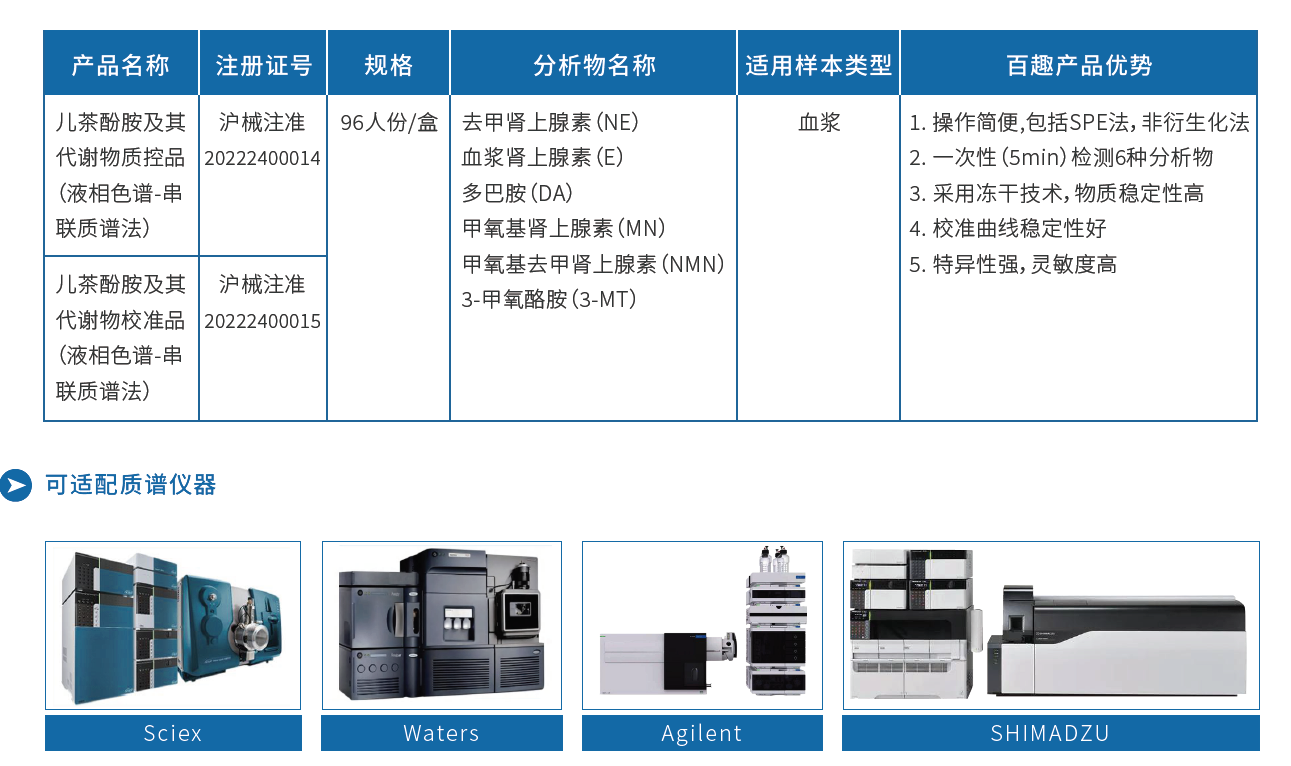
Suitable populatio
The guidelines recommend that people who need to be screened for pheochromocytoma and neuroblastoma / ganglioma:
·Have PPGL symptoms and signs, especially patients with paroxysmal hypertension with headache, palpitation, hyperhidrosis and postural hypotension.
·PPGL symptoms were induced by taking DA receptor antagonists, sympathomimetics, opioids, NE or serotonin reuptake inhibitors, monoamine oxidase inhibitors and other drugs.
·Patients with adrenal incidentaloma.
·Patients with a family history of PPGL or PPGL related genetic syndrome.
·PPGL patients with previous history.
Differential exclusion diagnosis of other diseases similar to pheochromocytoma (abnormal blood pressure; metabolic disorder; arrhythmia, failure, etc.)
·People with cerebral hemorrhage, brain tumor, brain injury, hydrocephalus, intracranial infection, inflammation, severe headache, frequent vomiting, lethargy, coma, dizziness, etc.
People with depressive tendencies or symptoms:
·Such as lack of interest, depression, anxiety, etc.
Parkinson's disease
Patients with diabetes
