Introduction
The Plant NGM 2 Pro is designed for high accuracy, with metabolite identification criteria aligned with international journal standards. This service addresses two key challenges in plant metabolomics, one is identifying known metabolites precisely, the other is discovering previously unknown metabolites. Besides, Plant NGM 2 Pro delivers better performance in longering testing time length and identification accuracy compared to Plant NGM, achieving an average of over 4,500 metabolites identified, and more than 1,200 level 1 identifications.
Technical Advantages
◉ Accuracy: aligned with international MSI standards, reaching up to 98.5% for level 1 identification
◉ Stringency: standardized library-construction workflow; stringent 9D quality control system
◉ Comprehensive: over 20,000 standards in the BiotreeDB V4.0 library and an additional plant-specific library consisting of over 20,000 standards.
◉ Coverage: high detection depth, with level 1 identifications exceeding 2,400 on average, and reaching up to 1,900 in some projects
◉ Performance: high sensitivity, high resolution instrument with stable analytical performance
Samples requirements
Fresh samples | ≥100 mg |
Dried samples | ≥ 1 ml |
Root exudates (liquid) | ≥ 4 ml |
Cells/Microorganisms | 1×10⁷ cells/sample |
Platform
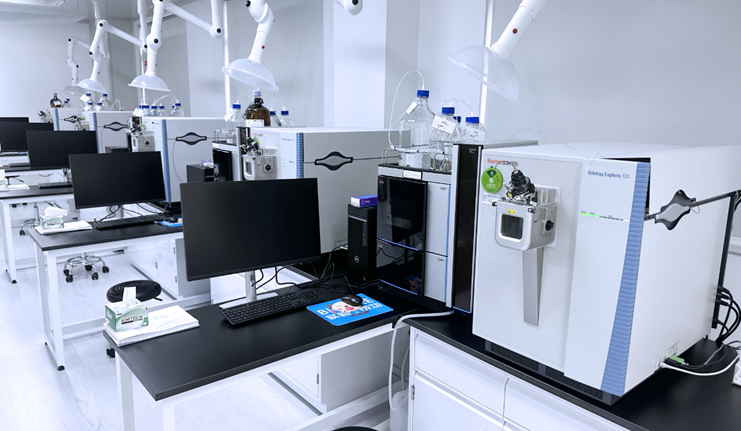
Orbitrap Exploris 120, Thermo
Application
◉ Biotic stress
◉ Abiotic stress
◉ Quality trait
◉ Fruit color and flavor
◉ Growth and developmental biology
Publication
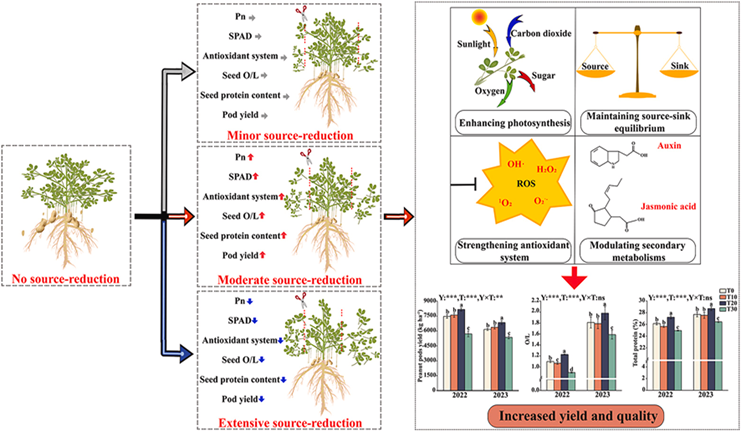
Title: Moderate source-reduction improves peanut yield and quality through modulating photosynthesis, source-sink equilibrium, and secondary metabolisms
Time: 2025
Journal: Plant Physiology and Biochemistry
Impact Factor: 5.7
Background: Peanut is a important global source of edible oil and protein. However, its cultivation is often constrained by excessive vegetative growth, as overproliferation of stems and leaves consumes large amounts of assimilates, reducing nutrient allocation to pods and ultimately leading to lower yield and inferior quality. Conventional approaches rely on chemical growth retardants to control vegetative vigor, such as paclobutrazol and uniconazole, which may cause soil and water pollution and raise food safety concerns. Source reduction (removal of parts of the vegetative organs) is an effective strategy for regulating crop source-sink balance (allocation of assimilates between vegetative and reproductive organs) has been successfully applied in wheat and maize. Though studies on underground podding peanuts are scarce, and the potential synergistic effects of source reduction and mechanical injury remain unclear. This study conducted a two-year field experiment to investigate how different levels of source reduction affect yield, quality and underlying mechanisms of peanuts.
Results: The results demonstrate that moderate source reduction (removal of 20 cm of leaves between rows) is an optimal strategy for environmentally sustainable peanut cultivation. Without the use of chemical growth inhibitors, this treatment enhances photosynthesis, reinforces antioxidant capacity, balances source-sink allocation, and modulates secondary metabolism, thereby simultaneously improving yield and quality. These findings provide novel insights for high-yield and high-quality production of legume crops, and future work should further elucidate the molecular regulatory mechanisms.