

Introduction
Spatial Metabolomics is an analytical approach based on mass spectrometry imaging (MSI) that extends metabolomic analysis to the spatial level. It enables the investigation of biological metabolic processes across qualitative identification, relative quantitative measurement, and spatial localization of metabolites within a sample.
Atmospheric Pressure Scanning Microprobe Matrix-Assisted Laser Desorption/Ionization Mass Spectrometry Imaging (AP-SM-MALDI-MSI) utilizes Matrix-Assisted Laser Desorption/Ionization (MALDI) technology to directly scan biological samples under atmospheric to medium-pressure conditions. The technique measures the mass-to-charge ratio (m/z) of ions using a mass spectrometer to determine the standard molecular masses of biomolecules. Specialized MSI software is then employed to generate molecular images. This method allows for label-free detection of metabolite composition and relative abundance within a sample, while also providing insights into the specific spatial distribution of metabolites. Consequently, it holds significant application potential in fields such as clinical medicine, molecular biology, botany, and zoology.
Technical Advantages
◉ Simultaneous analysis of chemical composition, abundance, and spatial distribution characteristics
◉ High spatial resolution and high mass resolution
◉ Simple operational workflow with broad applicability
Sample Requirements
◉ Accepted Sample Types: Frozen embedded samples, fresh tissues snap-frozen (in liquid nitrogen or dry ice), and fresh plant samples.
◉ Structural Integrity: Maintain the original physical spatial morphology of the sample and ensure intact cellular structures as much as possible.
◉ Handling Fresh Samples: Minimize exposure time to ambient air for newly collected samples; embed or snap-freeze them immediately.
◉ Embedding Requirements: Samples that are small in volume, difficult to maintain shape, contain cavities, or have high water content must be embedded before shipping.
◉ Embedding Medium: Carboxymethyl cellulose (CMC) is recommended. OCT and paraffin embedding are not recommended. Consultation is required prior to using any other embedding agents.
◉ Storage and Shipping: Embedded and snap-frozen samples must be stored at -80°C. When shipping, use sufficient dry ice to prevent any freeze-thaw cycles.
MS Platform
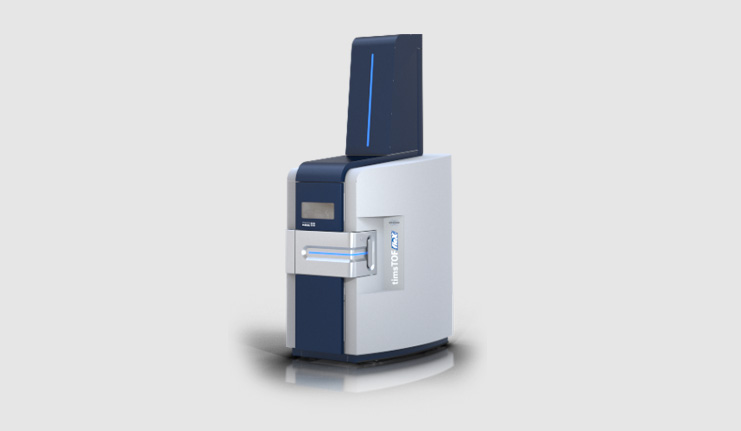
timsTOF fleX, Bruker
Applications
◉ Life Sciences: Visualization of the spatial distribution of substances within tissues.
◉ Clinical Medicine: Analysis of disease mechanisms in tumors, cardiovascular diseases, and metabolic disorders to identify potential biomarkers.
◉ Drug Development: Elucidation of molecular mechanisms and precise localization of drug distribution within tissues.
◉ Other Research Fields: Applications in agriculture, environmental science, plant pathology, and gut microbiome research.
Example Publication
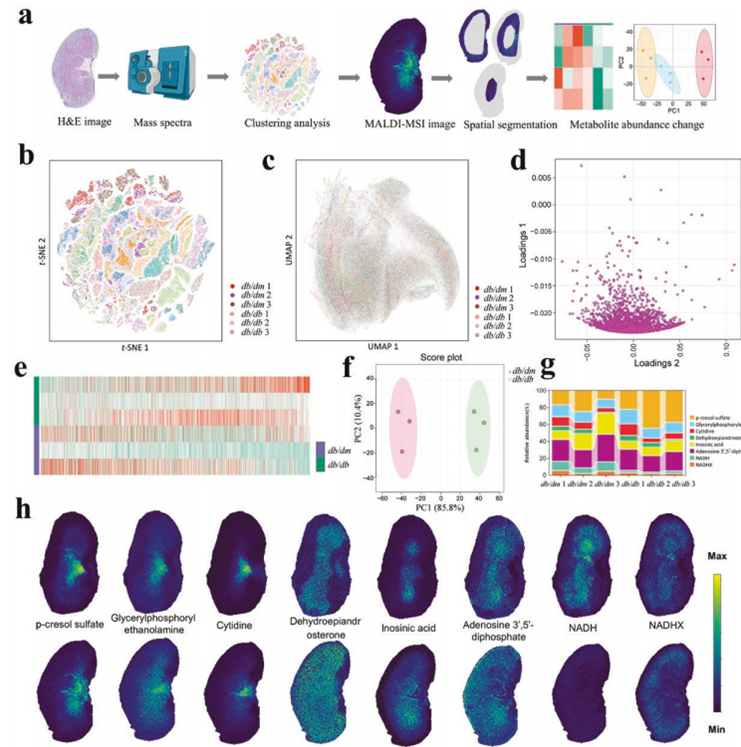
Fig. Display of Spatial Metabolomics Results in Diabetic Mouse Kidneys
Title: Spatially Segregated Multi-omics Decodes Metformin-Mediated, Function-Specific Metabolic Characteristics in Diabetic Kidney Disease
Journal: Life MetabolismImpact Factor: 3.4
Research Findings:
By integrating spatial metabolomics and proteomics, this study systematically elucidated the metabolic characteristics of distinct anatomical regions in the kidneys of diabetic mice and the therapeutic mechanisms of metformin.
Key findings include:
Regional Metabolic Profiling: In diabetic mouse kidneys, the cortex and outer medulla were enriched in purine metabolism and ether lipid metabolism pathways, whereas the inner medulla was dominated by pantothenate and CoA biosynthesis pathways.
Metformin Effects: Metformin treatment significantly upregulated metabolites such as hypoxanthine and NADH in the cortex and outer medulla, while downregulating p-cresol sulfate in the inner medulla.
Proteomic Insights: Proteomic analysis identified Nphs2 as the protein with the highest loading score, showing a strong correlation with metabolic changes.
Mechanism of Action: Through co-expression network construction, the study revealed that metformin exerts its renoprotective effects by regulating region-specific metabolic pathways, such as oxidative phosphorylation in the outer medulla and sulfur metabolism in the inner medulla.
Significance:
This study is the first to reveal region-specific metabolic disorder patterns in diabetic kidney disease and the multi-target therapeutic mechanisms of metformin at a spatial resolution level, providing a molecular foundation for precision medicine.
