

Introduction
The NGM 2 Pro addresses key challenges in metabolomics, including limited identification accuracy and insuffcient metabolite coverage. It is one of the core analytical approaches in metabolomic research. Built on LC-MS (liquid chromatography-mass spectrometry), the platform enables efficient identification of metabolites in biological samples, capturing dynamic alterations in the majority of endogenous small molecules before and after external stimulation. Its analytical focus lies in identifying significantly differential metabolites between control and experimental groups, followed by investigation of their associations with physiological and pathological processes. The primary analytical targets are small molecules with molecular weights below 1,500 Da. Due to extensive diversity and physicochemical properties of metabolites, no single approach currently exists that can extract all metabolites present in a sample. NGM 2 Pro employs a combined multi-column chromatographic strategy, enabling comprehensive detection of non-polar metabolites, polar metabolites, non-polar lipids and polar lipids. This approach further increases the number of for identifiable metabolites in samples and provides expanded opportunities for biomarker discovery and mechanistic studies.
Technical Advantages
◉ Metabolite identification accuracy reaches up to 98.5% (Level 1)
◉ Up to 60% of metabolites consistently detected across cohorts (Level 1)
◉ Nearly 10-fold increase in accurate identified metabolites, reaching over 1,000 level 1 metabolites
◉ Total number of reliably identified metabolites exceeding 3,500
◉ Stringent 9D quality control system
Samples requirements
Serum/Plasma | 200 μL/sample |
Urine | 200 μL/sample |
Tissue | 200 mg/sample |
Feces/Intestinal contents | 200 mg/sample |
Cell/Microorganisms | 1×10⁷ cells/sample |
Culture medium | 200 μL/sample |
Biological replicates:
Sample size: Plant and microorganisms n ≥ 6 Animal samples n≥10 Clinical samples n≥30 All replicates are analyzed independently.
For other sample types, please contact the company's sales prior to collection.
Platform
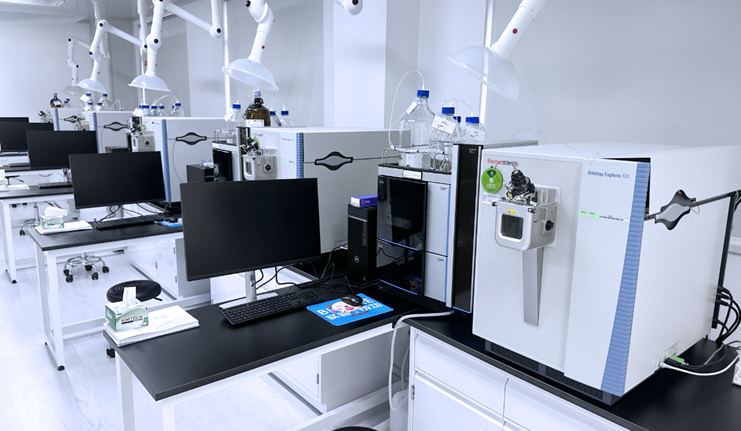
Orbitrap Exploris 120, Thermo
Applications
◉ Clinical diseases: biomarker discovery, therapeutic efficacy monitoring, disease stratification
◉ Food science: nutrition analysis, clinical nutrition studies
◉ Animal science: precision feeding, disease prevention, developmental biology research
◉ Pharmaceutical research: drug development and toxicity evaluation
◉ Traditional Chinese medicine: mechanism-of-action studies and target analysis
◉ Environmental toxicology: exposomics studies
