

Introduction
Traditional metabolomics can reflect changes in metabolites within an organism and identify potentially activated pathways. However, since a single metabolite may participate in multiple metabolic pathways without a change in its total abundance, this approach has limitations. Metabolic networks are complex and dynamic, whereas standard metabolomics provides only static information on metabolite abundance. Isotope tracing effectively addresses these limitations.
Biotree’s Target Isotope Tracing method covers labeled metabolites across 146 energy metabolism-related compounds in a single run, providing a comprehensive view of cellular energetic dynamics.
Technical Advantages
◉ Isotope Tracing Capabilities:
◉ Isotope Tracing Analysis on: 13C, 15N and 2H (customizable) labeled tracers.
◉ Extensive Coverage of Energy Metabolism Pathways:
◉ High-Throughput Detection: Simultaneously detects over 140 metabolites associated with energy metabolism in a single run.
◉ Central Carbon Metabolism: Comprehensively covers the three core pathways: Glycolysis, the Tricarboxylic Acid (TCA) Cycle, and the Pentose Phosphate Pathway (PPP).
◉ Associated Metabolic Routes: Includes Amino Acid Metabolism, Nucleotide Metabolism, Purine Metabolism, and Pyrimidine Metabolism, among other pathways critical to energy homeostasis.
Sample Requirement
Serum/Plasma | 200ul |
Urine | 200ul |
Tissue | 100mg |
Stool | 100mg |
Culture supernatant | 200ul |
Fresh Plant | 2g |
Freeze-dried Plant Powder | 25mg |
Cells/Bacteria | 1*10^7 |
LC-MS Platform
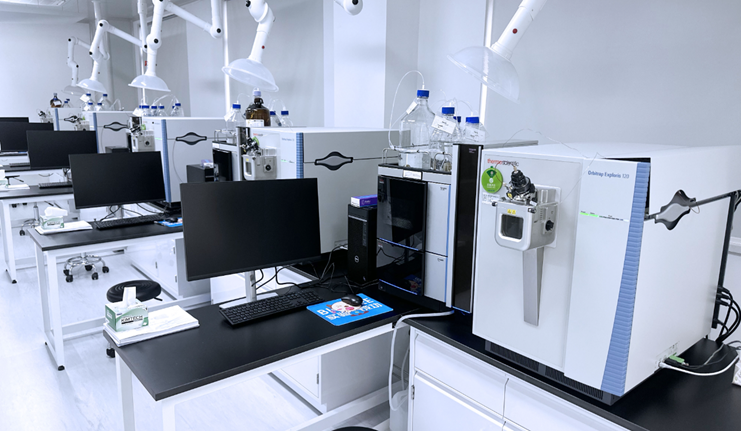
Orbitrap Exploris 120, Thermo
Applications
◉ Elucidate Energy Sources for Cell Proliferation: Identify and quantify the specific metabolic substrates fueling cellular growth and division.
◉ Evaluate Metabolic Reprogramming: Assess how metabolic pathways are rewired in response to genetic perturbations or pharmacological interventions.
◉ Assess Redox Status and Energetic Levels: Determine the cellular oxidation-reduction balance alongside overall energy metabolism capacity.
◉ Quantify Dynamic Metabolic Changes and Flux Distribution: Characterize in vivo metabolic dynamics and map the distribution of fluxes across various metabolic pathways with quantitative precision.
◉ Uncover Metabolic Drivers of Disease: Reveal key alterations in metabolic pathways during disease initiation and progression, thereby advancing the understanding of underlying physiological and pathological mechanisms.
◉ Identify Key Genetic Regulators and Define Network Properties: Pinpoint critical genes within signaling cascades governing cell growth and proliferation, and describe metabolic network characteristics by integrating enzyme reaction kinetics.
Example Publication
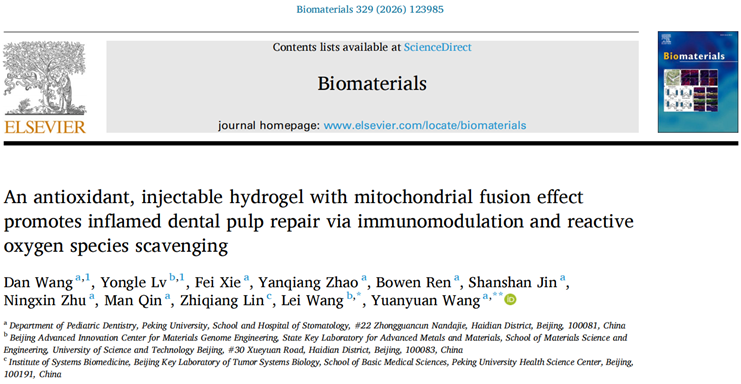
Title: An antioxidant, injectable hydrogel with mitochondrial fusion effect promotes inflamed dental pulp repair via immunomodulation and reactive oxygen species scavenging
Journal: BiomaterialsImpact Factor: 12.9
Research Findings:
This study developed the MASM7@CSMAGA hydrogel, a material endowed with immunomodulatory and antioxidant capabilities, designed to accelerate the repair of inflamed dental pulp tissue following pulpitis.
Key findings include:
◉ Mechanism of Action: MASM7 promotes mitochondrial fusion, which drives the polarization of THP-1-derived macrophages from the pro-inflammatory M1 phenotype to the anti-inflammatory M2 phenotype under inflammatory conditions.
◉ Metabolic Reprogramming: This phenotypic switch is accompanied by a distinct metabolic reprogramming, where the primary energy generation pathway shifts from glycolysis to oxidative phosphorylation (OXPHOS).
◉ Enhanced Regeneration: Co-culturing MASM7-treated THP-1-M cells with dental pulp stem cells (DPSCs) significantly enhances the reparative capacity of the stem cells in an inflammatory environment.
◉ Material Properties: The CSMAGA hydrogel exhibits excellent injectability and biocompatibility. It serves as an efficient delivery vehicle for MASM7 and concurrently exerts antioxidant effects by scavenging reactive oxygen species (ROS).
