

Polycystic ovary syndrome (PCOS) and hyperandrogen素
Polycystic ovary syndrome (PCOS) is a common gynecological endocrine and metabolic disease, involving 5 ~ 10% of women of childbearing age, seriously affecting the quality of life, fertility and long-term health of patients. Its clinical manifestations are heterogeneous, including ovulation disorders, amenorrhea or rare menstruation, infertility, obesity, hirsutism, polycystic ovarian enlargement, and metabolic disorders such as hyperandrogenemia, abnormal glucose metabolism, and abnormal lipid metabolism.
Pathogenesis: the level of free testosterone (T) is increased in 60%-80% of PCOS patients, and dehydroepiandrosterone sulfate (DHEAS) is increased in 25% of PCOS patients. Therefore, many researchers speculate that steroid hormone imbalance is the main cause of PCOS. The excessive androgen in PCOS patients mainly comes from the ovary. The characteristic of PCOS ovary is that the theca cell layer covering the follicle proliferates significantly and produces excessive androgen under the action of LH, which may be caused by the abnormal intracellular signal pathway leading to the up regulation of the enzyme level of synthetic steroids. In addition, the abnormal regulation mechanism of enzymes such as p450c17a, which are closely related to steroid hormone synthesis in the adrenal gland, is also considered to be the reason for the increase of androgens, and the increased sensitivity or hyperfunction of target cells of ACTH may be related to this. Hyperandrogenemia is an important endocrine feature of PCOS. It is mainly manifested in the long-term high level of ovarian local and circulating androgens, which will hinder the normal growth of follicles. It causes anovulation or rare ovulation, which is characterized by menstrual cycle disorder, and usually amenorrhea or rare menstruation. At the same time, it can also cause clinical symptoms such as hirsutism, acne, seborrheic alopecia, etc.
Clinical significance
Assessment of hyperandrogenemia
Assisted differentiation of polycystic ovary syndrome PCOS
Tumors indicating abnormal secretion of sex hormones by ovaries or adrenal glands
Suggestive Cushing syndrome
It suggests congenital adrenal hyperplasia
Efficacy monitoring
Hormone status assessment
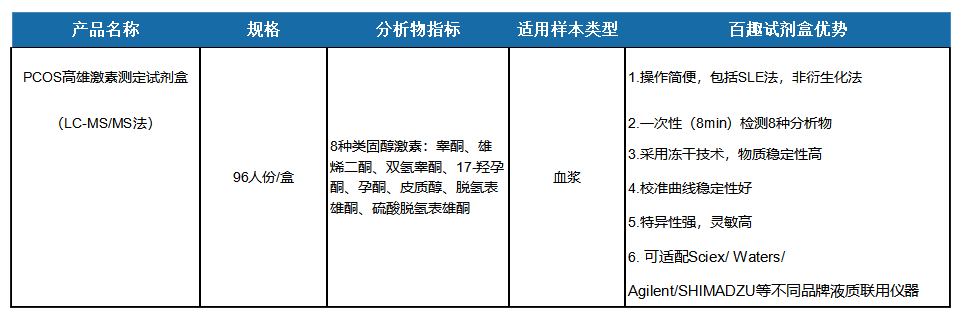
试剂盒特点及检测指标
Suitable population
(1) Female patients with suspected PCOS during puberty, childbearing age and perimenopause:
Menstrual disorder (irregular menstruation, rare occurrence), amenorrhea, abnormal uterine bleeding
Hyperandrogenemia: hirsutism, acne, masculinity, alopecia, etc
Infertile population
Polycystic change of ovary
Ovulation disorder (rare ovulation or anovulation)
(2) Patients receiving hormone therapy for a long time
(3)People who preparate for Pregnancy
